
FeatureOneMusic / FAZEmag
OneMusic traces the memory behind Stella Bossi's Sonic
OneMusic explores the personal memory behind Stella Bossi's Sonic, with complementary release coverage from FAZEmag.
Original reporting
Press note published

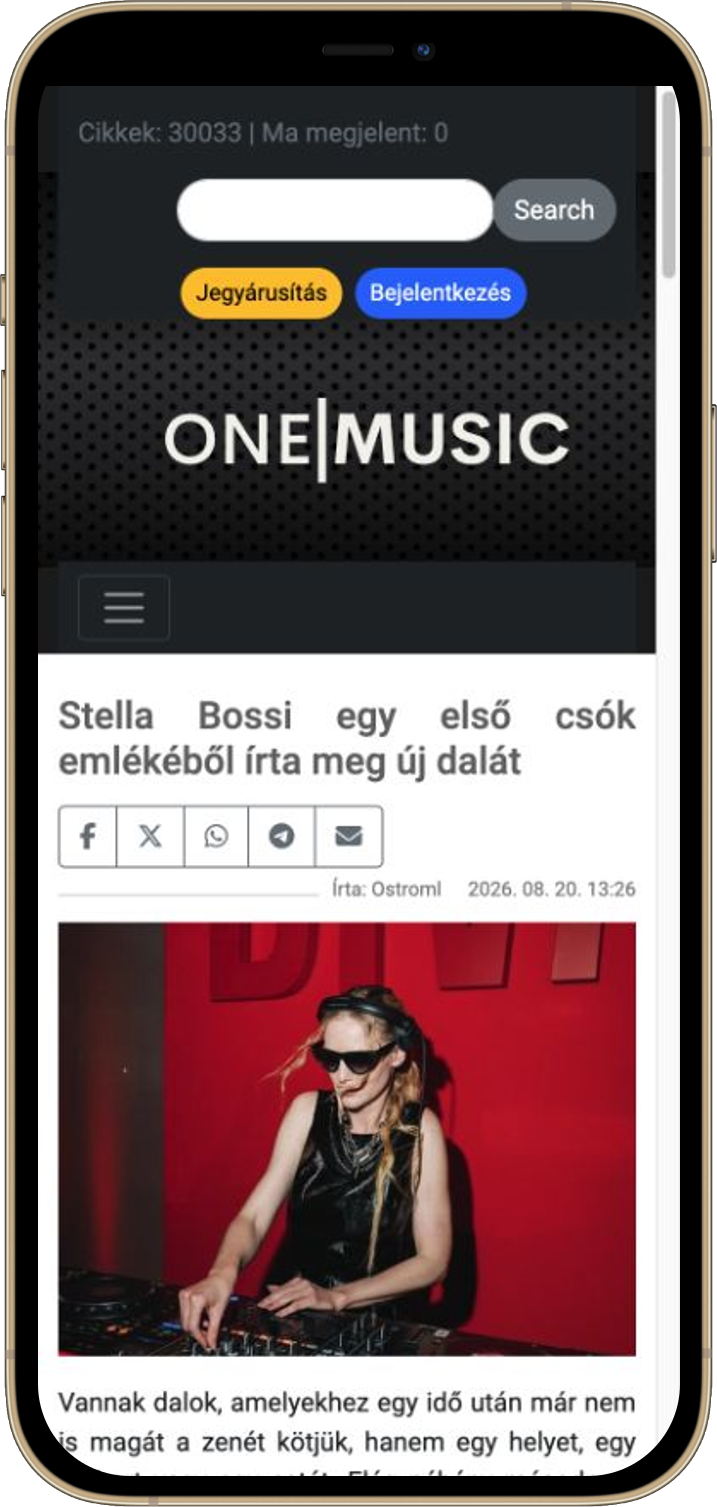
OneMusic's 20 August 2026 article approaches Stella Bossi's Sonic through the personal memory behind the track. The article, credited to Ostroml, links its starting point to Manu Chao's Bongo Bong, which Bossi associates with her first kiss. It explores how a familiar song can bring back a place, a summer and the feelings attached to it, reading Sonic as an attempt to carry those emotions into electronic music.
The report places Sonic after Time as the second preview of the then-forthcoming Berlin EP. Its focus is the personal perspective this story offers on an artist known for her distinctive public image and club performances. FAZEmag's shorter report, by Anil Mustafa, covers the same release and its themes of youth, freedom and summer memories. Published on 20 August and updated the following day, it provides complementary release coverage.
Bossi számára így egy nagyon személyes emlékből lett elektronikus zene.
English translation
For Bossi, a very personal memory thus became electronic music.
Original reporting
Explore the sources
Stella Bossi egy első csók emlékéből írta meg új dalát
Source contribution: quoted reporting by Ostroml for OneMusic. This credit identifies the original reporting used here; it does not imply participation in or approval of this press note.
Read original articleStella Bossi meldet sich mit „Sonic“ zurück
Read original article